Meet some of the babies currently living at the zoo.
Sitatunga
November 10, 2011
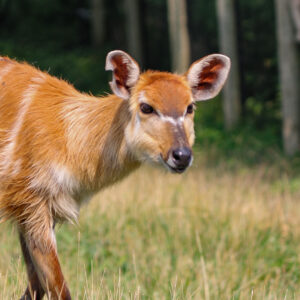
When a baby sitatunga was born the morning of Thursday, November
10, African Journey zoo keepers kept a watchful eye on the tiny new
calf and his mother, Shiloh. Hoofstock usually stand and
nurse within a few hours of birth, but this calf wasn’t able to stay
on his feet. “He was too weak to stand, and since he couldn’t
stand, he was unable to nurse,” says African Journey Manager Amber
Eagleson.
By that afternoon, keepers decided to bottle-feed the calf to help
him gain strength. “We bottle-fed him every four hours,”
Eagleson says. “At first, he would only take a small amount
because he was so weak, but by Friday afternoon he was steadily
drinking from the bottle.”
Shiloh did her part by waiting patiently when her calf was moved to
a separate stall at feeding time. When keepers returned the
calf to her, she groomed him vigorously to remove all traces of
human scent. By Monday, keepers saw the calf nursing for the
first time.
“We’re still giving him a bottle and weigh him once a day,” Eagleson
says. The calf weighed only 3.4 kilograms at birth,
significantly less than the other sitatunga calves born at the zoo,
but he’s catching up. “If his weight increases over the next
week, we’ll drop the bottle feedings and let mom take over
completely,” Eagleson says. She adds that keepers hope
to name the baby in the next few weeks.
The Fort Wayne Children's Zoo has had great success breeding these
unique marsh-dwelling antelope: five calves have been born
here since 2006.
Click
here to learn more about sitatungas.
![]() |
![]() |
|
| The male baby sitatunga was born on November 10. | The calf weighed only 3.4 kilograms at birth, far less than a typical sitatunga | The calf is ready to go back to his mother, Shiloh, after his daily weigh-in. |
![]() |
![]() |
![]() |
| The zoo has had five sitatunga births since 2006. | Sitatungas dwell in swampy regions of central Africa. | The calf, which is not yet named, settles down for a rest after his weigh-in. |
Swamp Monkey
September 8, 2011
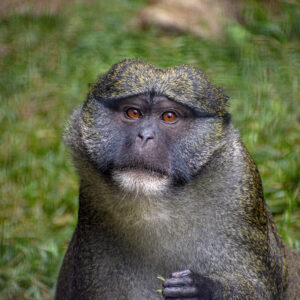
The newest member of the swamp monkey family was born on September 8. The new baby spends most of its time with mother Brie, but big sisters Izzy and Calvin and big brother Anderson are extremely interested in the new arrival. “Once the baby starts exploring the exhibit in a few weeks, we’ll see lots of activity among the group,” says African Journey Area Manager Amber Eagleson. Keepers are fairly certain that the baby is a female, but they have not yet named the baby.
![]() |
![]() |
![]() |
| The new baby spends much of the day clinging to mom and nursing. | In a few weeks, the baby should start exploring the exhibit on her own. | Big sisters Calvin and Izzy and big brother Anderson are very curious about their new sibling. |
Wildebeest
July 6 & September 13, 2011
Two
young wildebeest have arrived on the savannah in the African
Journey! Miqueas, a male, was born on July 6. At that
time, the entire wildebeest herd was in an off-exhibit yard to
protect the baby from the zebras, who can be aggressive toward
wildebeest calves. In September, the zebras moved off exhibit
and the wildebeest herd moved back onto the savannah. Just one day
later, on September 13, a second calf was born as zoo guests watched
on the Savannah Cam!
Sitatunga
August 25, 2011
The normally quiet sitatunga exhibit in the African Journey was full
of excitement on Thursday, August 25 when zoo guests
alerted keepers that one of the females was giving birth right
before their eyes! The female sitatunga, Lucy, delivered
a healthy male calf that day.
Keepers spent the next few days watching closely to make sure the
baby was nursing successfully. Sitatungas can stand and walk
shortly after birth. “Mom and baby are doing great,” says zoo
keeper DeAnna Harris.
In their native African habitat, sitatungas feed in marshy areas,
slipping into deeper water at the first sign of danger. Their
curved, split hooves help them walk on spongy vegetation.
You may have a hard time locating the new baby in the exhibit,
because sitatungas hide their young in tall grass. Mom visits
the baby only at feeding time, and the calf spends remainder of the
day resting in its hiding place. Helpful hint: Look for
the tips of the calf’s ears poking up above the grass.
![]() |
![]() |
| The baby sitatunga spends most of the day hiding in the tall grass (above). The baby follows mom Lucy closely (right). |
Tawny Frogmouth
June 30, 2011
The zoo’s first-ever tawny frogmouth chick has hatched! On June
30, zoo keepers found a tiny white ball of fluff in the nest of Max
and Henson in their exhibit on the Australian Adventure Plaza.
The pair had been living in the Australia Welcome Center, but moved
to an outdoor home this spring.
The tiny chick weighed just 15 grams at five days old, and had not
yet opened its eyes. Though the parents are caring for the
chick, zoo keepers offer two supplemental feedings every day to
support the chick’s development.
Tawny frogmouths are some of the best-camouflaged birds around.
Their mottled brown feathers, along with their habit of posing
stock-still with beak pointed to the sky, make them nearly
impossible to see in their wooded habitat.
Though there is a second egg in the frogmouths’ nest, keepers are
unsure whether it will hatch, since its due date has passed.
In the meantime, they are hopeful that this tiny chick will grow and
thrive.
![]() |
![]() |
| The tiny chick weighed only 15 grams at five days old. | Zoo keepers offer meat twice a day to supplement the chick's diet. |
Ring-tailed Lemur
June 11 & 12, 2011
The ring-tailed lemur troop experienced a baby boom with the
addition of three little lemurs. Caera gave birth to twin male
babies and Seiodin delivered a single female baby on June 11 and 12,
respectively. Seiodin is Caera's mother, so she became a mom
and a grandmother in the same weekend.
For now, the babies cling to their mothers most of the time, but
within a few weeks, they will begin exploring their exhibits.
Since the troop now contains 10 lemurs, they've expanded into the
exhibit next door, so be sure to check both exhibits for babies.
![]() |
![]() |
| Caera's twins hang on to her belly as she walks. Twins are not uncommon in ring-tailed lemurs. | The tiny heads of Caera's one-week-old twins can be seen against her belly. |
![]() |
![]() |
| Seiodin shows off her one-week-old baby. | The new babies have several "aunties" in the troop who are very interested in helping with their care.. |
Banded Mongoose
Born August 2, 2010
African Journey
Our banded mongoose baby boom continues!
Five baby banded mongooses, born on August 2, made their exhibit
debut this week. Combined with seven babies born in November,
six babies born in March, and our original seven adults, we now have
25 mongooses in the colony.
|
|
| Five banded mongoose babies were born on August 2. | At just 3 weeks old, the babies are already growing fast. |
"Us babies gotta
stick together!"
All the adults in the colony
help care for the babies.
Swamp Monkey
Born July 3, 2010
African Journey
Our swamp monkey family has a new baby! Female baby Izzy joins
big brother Anderson, age 1-½, and big sister Calvin, age 4. Adult
female Brie and adult male Bangi are the parents of all three
youngsters.
![]() |
![]() |
| Baby Izzy at just 4 days old. | Izzy spends most of her time near mom, but is gradually exploring her surroundings. |
Reticulated
Giraffe
Born June 3, 2010
African Journey
It's a girl! Kesi (pronounced KESS-ee) is the 16th reticulated giraffe born at the zoo. First-time mom Luna is doing an excellent job caring for her new baby. With addition of the new baby, our current giraffe herd has grown to seven!
![]() |
| As a first-time mother, Luna is very
protective of her baby. Luna and Kesi will remain off exhibit in the barn for a few weeks while they settle in. |
![]() |
![]() |
| A shy Kesi peeks out of the barn door. | Luna leads Kesi into the barnyard. |
![]() |
![]() |
| Kesi and Luna | A portrait of Kesi at 11 days old. |
![]()
welcomes all of these
zoo babies!